Read the full context, compare alternatives and consider your own circumstances before making a financial decision.
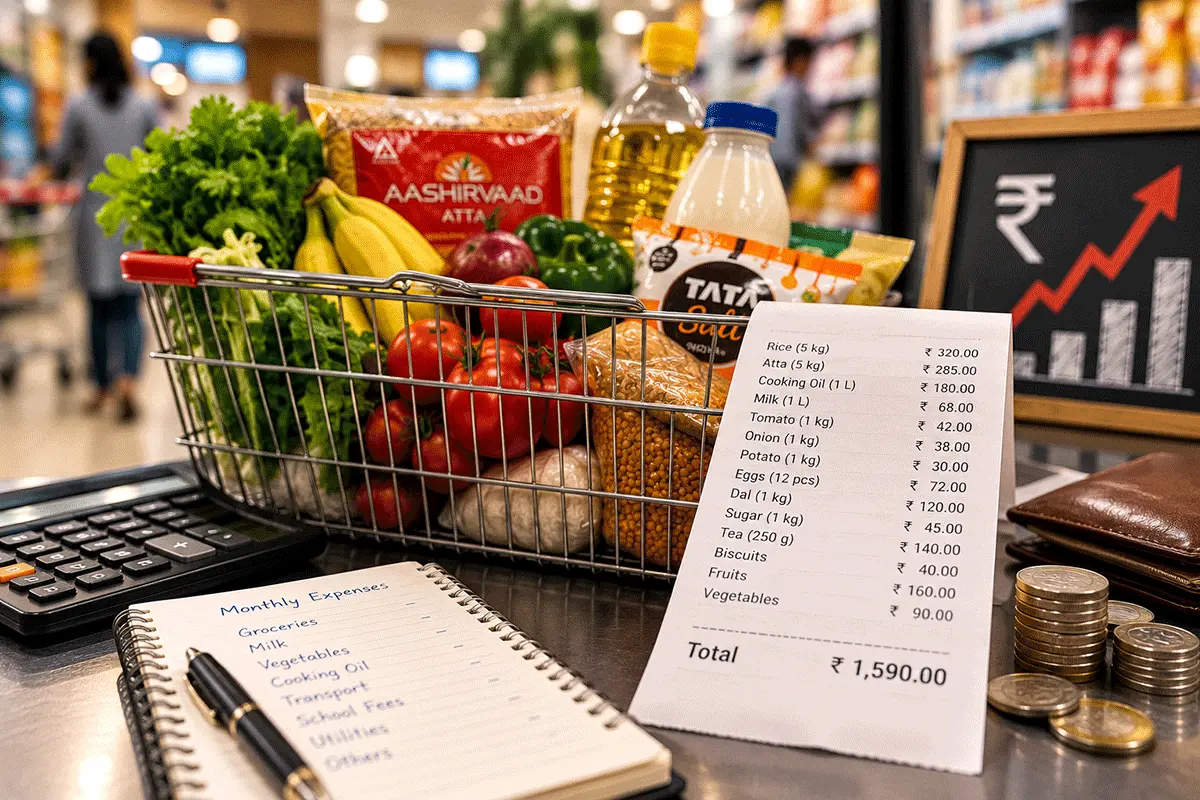
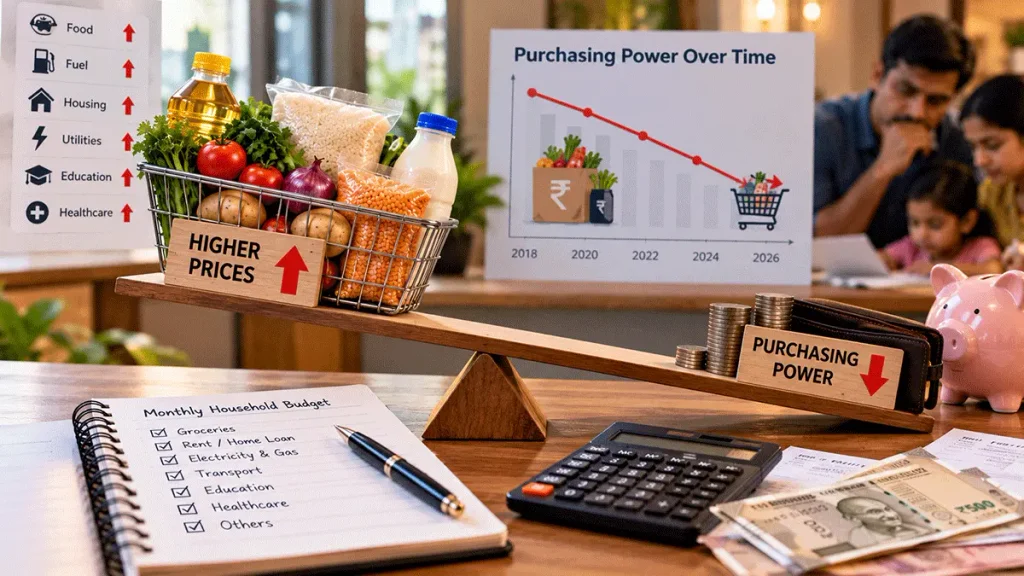
You visit your neighbourhood grocery shop with ₹1,000. A few years ago, that amount might have been enough for rice, vegetables, cooking oil, milk and several other household essentials. Today, you may return with a noticeably smaller shopping bag.
Your income might have increased during those years, yet your monthly expenses seem to have grown just as quickly—or even faster. This is one of the most familiar effects of inflation.
Inflation influences almost every aspect of household finances, from grocery bills and school fees to bank deposits, home loans and retirement savings.
In India, inflation is measured using several economic indicators, but the Consumer Price Index (CPI) is particularly important because it tracks changes in the prices paid by consumers. Understanding CPI can help you interpret economic news, evaluate savings returns and make more informed financial decisions.
What Is Inflation?
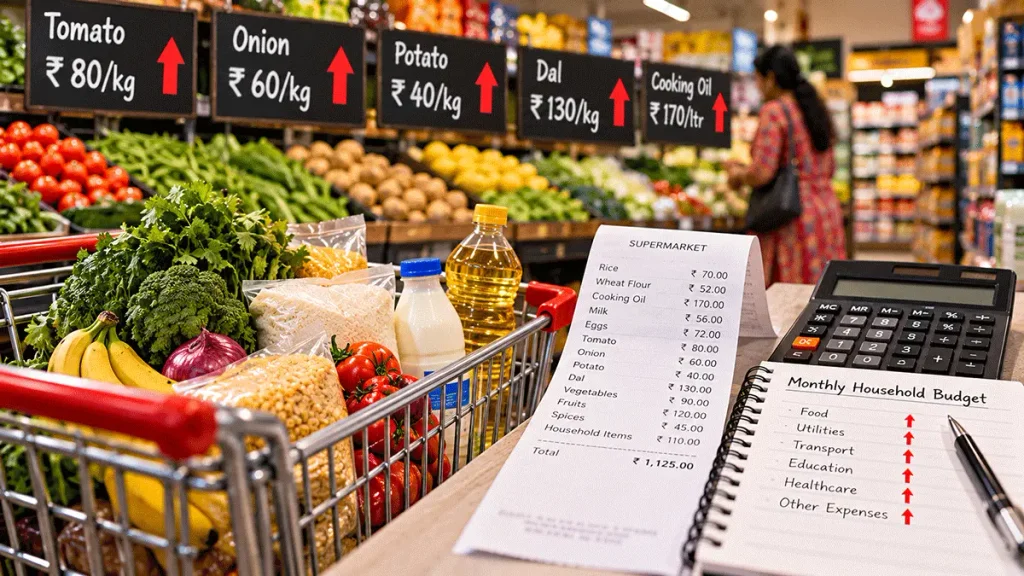
Inflation refers to a sustained increase in the general price level of goods and services over time. When inflation rises, the purchasing power of money declines. In simple terms, the same amount of money buys fewer goods and services than before.
A Simple Example
Imagine a family spends ₹20,000 every month on a particular basket of household essentials. If the prices of that same basket increase by 5% over a year, the cost becomes approximately ₹21,000.
| Particulars | Amount |
|---|---|
| Original monthly expense | ₹20,000 |
| Assumed inflation rate | 5% |
| Increase in monthly expense | ₹1,000 |
| New monthly expense | ₹21,000 |
| Additional annual expense at the new monthly rate | ₹12,000 |
This is a simplified illustration. Actual household spending changes with consumption habits, individual product prices and other factors.
Inflation does not mean that every product becomes more expensive at the same rate. Some prices may increase sharply, others may remain unchanged, and some may decline. What matters is the overall change in the measured basket of goods and services.
What Is CPI in India?
CPI stands for Consumer Price Index.
It measures changes over time in the prices of a representative basket of goods and services purchased by households. The basket includes different categories of consumer expenditure, such as food, housing-related expenses, clothing, transport, healthcare and other services.
The Government of India’s Ministry of Statistics and Programme Implementation (MoSPI), through the National Statistical Office (NSO), compiles and releases CPI data. CPI is widely used to understand retail inflation.
Why Is CPI Important?
CPI helps economists, policymakers, businesses and households understand how consumer prices are changing.
It is used for purposes such as:
- Monitoring inflation.
- Supporting monetary policy decisions.
- Assessing changes in purchasing power.
- Analysing household living costs.
- Adjusting certain payments and economic indicators.
- Comparing price changes over time.
When financial news reports India’s retail inflation rate, it generally refers to the year-on-year change in the relevant CPI.
What Is the CPI Base Year in India?
India introduced a revised CPI series with 2024 as the base year, replacing the earlier 2012-based series. The revised series was first released in February 2026. Under this system, the base index value is expressed as:
2024 = 100
The updated series reflects changes in household consumption patterns and the goods and services included in the measurement basket.
The revision uses information from the Household Consumption Expenditure Survey 2023–24 and incorporates updated classification and data collection methods.
Why Does the Base Year Matter?
Consumer spending patterns change over time. For example, households may spend more on digital services, transport or healthcare than they did many years earlier.
A revised base year helps the index better reflect contemporary consumption. However, changing the base year does not mean inflation suddenly disappears or starts again.
It changes the reference and measurement framework used for calculating the index. When comparing historical inflation figures, it is important to check whether the data belong to compatible CPI series.
How Is the Inflation Rate Calculated?
The year-on-year CPI inflation rate compares the index level in a particular month with the index level in the same month of the previous year.
The simplified formula is:
Inflation Rate (%) = [(Current CPI − CPI One Year Earlier) ÷ CPI One Year Earlier] × 100
Example: Calculating CPI Inflation
Suppose the CPI values are:
| Particulars | CPI Value |
|---|---|
| September of the previous year | 105 |
| September of the current year | 110.25 |
Using the formula:
Inflation Rate = [(110.25 − 105) ÷ 105] × 100
Inflation Rate = 5%
This means the measured consumer price basket became approximately 5% more expensive compared with the same month one year earlier.
The figures above are hypothetical and are not official Indian CPI readings.
What Is the Difference Between Inflation and High Prices?
This distinction is frequently misunderstood. Inflation measures the rate at which prices change. It does not directly measure whether prices are affordable.
Suppose an item costs ₹100. After a year of 10% inflation, it costs ₹110. If inflation then falls to 4%, the item does not automatically return to ₹100.
Instead, if its price rises by another 4%, it becomes ₹114.40.
| Period | Inflation Rate | Illustrative Price |
|---|---|---|
| Starting point | — | ₹100 |
| After Year 1 | 10% | ₹110 |
| After Year 2 | 4% | ₹114.40 |
Inflation has fallen from 10% to 4%, but the price has continued rising. This is called disinflation—a slowdown in the rate of price increases. A sustained decline in the general price level is called deflation.
What Causes Inflation in India?
Inflation can arise from several interacting factors.
1. Higher Demand for Goods and Services
When demand grows faster than available supply, businesses may raise prices. For example, strong demand for accommodation during a major holiday season may increase hotel room rates. This is often described as demand-pull inflation.
2. Rising Production Costs
Businesses incur costs for raw materials, electricity, transportation, wages and other inputs. If these costs increase, some businesses may pass part of the increase on to consumers. This is commonly described as cost-push inflation.
3. Food Supply Disruptions
Food prices can be affected by weather, crop output, storage, transportation and supply-chain disruptions. Unexpected rainfall, heatwaves or crop damage may influence the prices of vegetables, grains and other food items. Food inflation is especially important for households that spend a large share of their income on essentials.
4. Higher Fuel and Energy Prices
Fuel prices influence transportation and production costs. When energy becomes more expensive, the effect may spread to other goods and services. However, the extent of the impact depends on taxation, business pricing decisions and other economic conditions.
5. Currency Movements
A weaker rupee can increase the rupee cost of imported goods, assuming other factors remain unchanged. This may influence prices of imported energy, raw materials and certain finished products.
6. Inflation Expectations
If businesses and households expect prices to rise significantly, they may change pricing, wage demands and spending behaviour. These expectations can influence future inflation dynamics.
What Is Food Inflation?
Food inflation measures changes in the prices of food-related items. In India, food prices are closely watched because they affect everyday household budgets.
The Consumer Food Price Index (CFPI) is one measure used to track food price movements. Food inflation may differ substantially from overall CPI inflation.
For example, food prices might rise rapidly while some other consumer categories experience smaller increases.
This is why an individual household’s experience of inflation can feel very different from the headline number.
Why Does Your Personal Inflation Rate Differ From CPI?
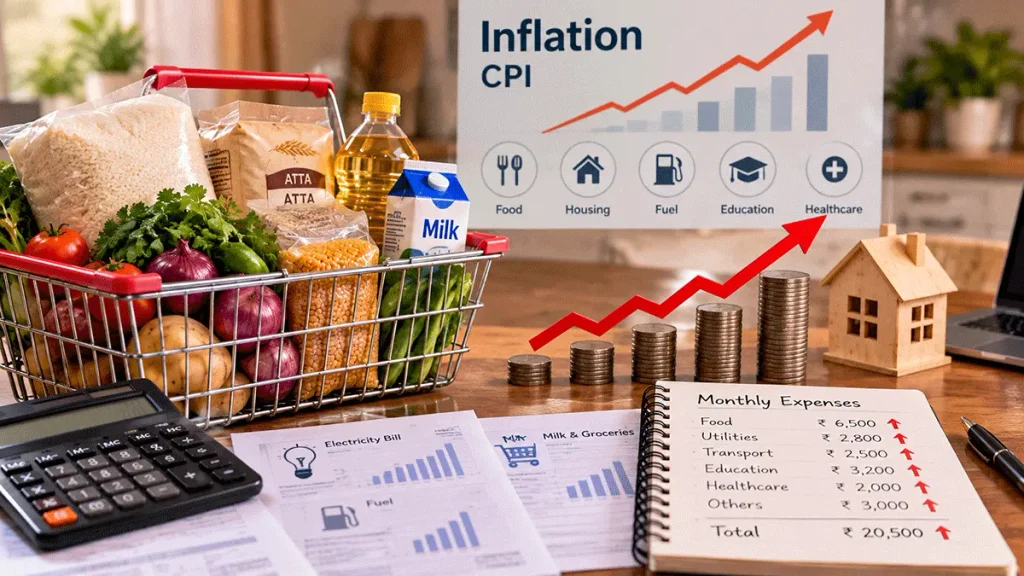
A national CPI figure represents a weighted average of prices across a defined consumption basket. But every household has different spending habits. Consider two hypothetical households.
Household A spends a large share of its budget on rent, school fees and transport.
Household B owns its home and spends a larger share on groceries and healthcare.
If school fees and rent increase sharply, Household A may experience greater financial pressure. If food and healthcare costs rise faster, Household B may be affected more. Both households live in the same economy, but their personal inflation experiences differ.
How to Estimate Your Personal Inflation
Compare the cost of a similar basket of household expenses across two periods.
For example:
| Expense Category | Last Year | This Year |
|---|---|---|
| Groceries | ₹8,000 | ₹8,800 |
| Transport | ₹3,000 | ₹3,300 |
| Utilities | ₹2,000 | ₹2,200 |
| Other regular expenses | ₹7,000 | ₹7,700 |
| Total | ₹20,000 | ₹22,000 |
The increase is ₹2,000.
Personal Expense Inflation = (₹2,000 ÷ ₹20,000) × 100 = 10%
This example assumes a comparable basket of expenses. If your family starts purchasing more items or changes its lifestyle, the increase in spending will not represent pure price inflation.
How Does Inflation Affect Savings Accounts?
A savings account provides liquidity and easy access to money. But the interest earned may not always keep pace with inflation.
Suppose your savings account earns 3% annual interest while inflation averages 5%. Your account balance increases in nominal terms, but its purchasing power declines.
Example
| Particulars | Value |
|---|---|
| Starting savings | ₹1,00,000 |
| Annual interest rate | 3% |
| Balance after one year, before tax | ₹1,03,000 |
| Assumed inflation rate | 5% |
| Purchasing power in starting-year rupees | Approximately ₹98,095 |
The final figure adjusts ₹1,03,000 for a 5% increase in prices. Although the balance increased, its inflation-adjusted value is lower than the original ₹1 lakh.
This is why inflation matters when evaluating savings. However, savings accounts remain useful for emergency funds and short-term liquidity.
For a more detailed comparison, read MoneyTrendy’s article Savings Account vs Fixed Deposit: Where Should You Keep Your Money?
How Does Inflation Affect Fixed Deposits?
Fixed deposits provide a specified interest rate for the agreed deposit period, subject to the bank’s terms. However, the nominal interest rate is not the same as the inflation-adjusted return.
Suppose a fixed deposit earns 7% annually while inflation is 5%. The approximate real return before tax is 2%. A more precise calculation uses:
Real Return = [(1 + Nominal Return) ÷ (1 + Inflation Rate)] − 1
In this example:
Real Return = (1.07 ÷ 1.05) − 1 = approximately 1.90%
This calculation excludes income tax and other potential costs. If interest is taxable, the investor’s after-tax real return may be lower.
Fixed deposits can still be appropriate for certain financial goals, but inflation should be considered when assessing their purchasing-power outcomes.
How Does Inflation Affect Loans and EMIs?
Inflation can influence borrowing costs through monetary policy and market interest rates. When inflation is persistently elevated, the Reserve Bank of India may tighten monetary policy to help control price pressures. Higher policy rates can influence lending rates, although the transmission varies across lenders and loan products.
Floating-Rate Loans
Borrowers with floating-rate loans may experience changes in interest rates, EMIs or repayment tenures according to their loan terms.
Fixed-Rate Loans
Fixed-rate loans generally offer greater certainty about the contracted interest rate during the applicable fixed-rate period. However, fixed-rate products may have different pricing and conditions.
Does Inflation Make Existing Loans Cheaper?
Inflation can reduce the real value of fixed nominal repayments over time. But this benefit depends on factors such as income growth and the borrower’s ability to continue making payments. If prices rise while household income remains unchanged, inflation may make debt repayment more difficult—not easier.
How Does Inflation Affect SIPs and Mutual Funds?
Many people invest for long-term goals such as retirement, children’s education or building financial security. Inflation matters because the future cost of these goals may be much higher than today’s cost.
Suppose a financial goal costs ₹5 lakh today. If its cost rises by 6% annually for ten years:
Future Cost = ₹5,00,000 × (1.06)^10
The estimated future cost becomes approximately ₹8.95 lakh.
This means a goal requiring ₹5 lakh today could require nearly ₹9 lakh after ten years under the assumed inflation rate. Investment planning should therefore consider future costs rather than only present-day amounts. Mutual funds and SIPs may be considered as part of a suitable long-term investment strategy, but they do not guarantee returns above inflation.
Equity markets can be volatile, and investment outcomes depend on market performance, costs and investment choices. For beginners, MoneyTrendy’s article What Is SIP and How Does It Work? explains the basic concept of systematic investing.
How Does Inflation Affect Retirement Planning?
Inflation is especially important for retirement because retirement expenses may continue for decades. Consider a household that currently spends ₹30,000 per month.
Assuming expenses rise by 6% annually:
| Time Period | Estimated Monthly Expense |
|---|---|
| Today | ₹30,000 |
| After 5 years | ₹40,147 |
| After 10 years | ₹53,725 |
| After 15 years | ₹71,897 |
| After 20 years | ₹96,214 |
Figures are rounded and based on a constant hypothetical inflation rate of 6%.
The table illustrates how compounding can substantially increase future living costs.
Actual inflation will fluctuate, and different expense categories may grow at different rates. Retirement planning should therefore consider both investment returns and the future purchasing power of money.
What Is the Role of RBI in Controlling Inflation?
The Reserve Bank of India plays an important role in maintaining price stability. One of its major tools is monetary policy.
The Monetary Policy Committee (MPC) makes decisions concerning the policy repo rate within India’s monetary policy framework.
What Is the Repo Rate?
The repo rate is the policy interest rate at which the RBI provides short-term liquidity to eligible banks against specified securities under its liquidity operations. Changes in the repo rate can influence broader interest rates and financial conditions.
How Can Higher Interest Rates Reduce Inflation?
Higher interest rates can make borrowing more expensive and encourage saving relative to spending. This may reduce demand pressures over time. However, interest-rate changes do not immediately solve every source of inflation.
For example, a crop failure or global oil supply disruption cannot be reversed simply by changing the repo rate. Monetary policy also operates with a time lag.
What Is the Difference Between CPI and WPI?
India also publishes the Wholesale Price Index (WPI). CPI and WPI measure different aspects of price changes.
| Feature | CPI | WPI |
|---|---|---|
| Full form | Consumer Price Index | Wholesale Price Index |
| Main focus | Consumer prices | Prices of goods at the wholesale level |
| Services included | Yes | No broad services basket |
| Common use | Retail inflation and monetary policy analysis | Producer and wholesale price trends |
| Household relevance | More directly related to consumer spending | More indirect |
CPI is generally more relevant when discussing changes in the cost of living for households.
WPI can help analysts understand price pressures in goods markets before they reach consumers, although the relationship is not automatic.
Is Inflation Always Bad?
High and unpredictable inflation can create serious economic problems. It reduces purchasing power, makes financial planning difficult and may disproportionately affect households with limited savings.
However, a moderate and relatively stable rate of inflation is not necessarily harmful. In a growing economy, prices and wages may change over time.
The main concern is whether inflation becomes excessive, unstable or difficult for households and businesses to anticipate. Deflation can also create problems if falling prices encourage delayed spending and contribute to weaker economic activity. The objective of monetary policy is generally price stability rather than ensuring that every individual price remains unchanged.
Seven Practical Ways to Manage Inflation
Inflation cannot be controlled by an individual household, but its financial impact can be managed.
1. Track Essential Expenses
Maintain a realistic monthly budget covering groceries, housing, utilities, transport, healthcare and other necessities. Review changes regularly.
2. Build an Emergency Fund
Keep accessible savings for unexpected expenses or temporary income disruptions. The appropriate amount depends on your circumstances and financial obligations.
3. Compare Interest Rates With Inflation
When evaluating deposits and other financial products, consider inflation-adjusted returns rather than nominal interest rates alone.
4. Avoid Unnecessary High-Cost Debt
Expensive borrowing can place additional pressure on a household budget already affected by rising prices.
5. Review Long-Term Financial Goals
Adjust estimates for education, housing and retirement expenses as costs change.
6. Diversify Investments Appropriately
A suitable investment mix may help manage different risks, but diversification does not guarantee positive returns.
7. Focus on Sustainable Income Growth
Developing professional skills, improving earning capacity and maintaining financial discipline can help households respond to rising living costs. The right approach depends on income stability, financial commitments and risk tolerance.
Common Inflation Myths
Myth 1: Lower Inflation Means Prices Are Falling
Not necessarily. Lower positive inflation usually means prices are rising more slowly.
Myth 2: Every Household Experiences the Same Inflation
Household spending patterns differ, so personal inflation can vary significantly.
Myth 3: A Bank Deposit Always Protects Purchasing Power
A deposit can earn interest while still losing purchasing power after inflation and taxes.
Myth 4: Stock Market Investments Always Beat Inflation
Equity investments involve risk and can produce negative returns, including over extended periods.
Myth 5: RBI Can Control Every Price Increase
Monetary policy influences financial conditions, but some price pressures arise from supply disruptions and other factors outside its direct control.
The MoneyTrendy Takeaway
Inflation is more than an economic statistic. It affects the groceries you buy, the interest you earn, the loans you repay and the amount you may need for future financial goals.
India’s Consumer Price Index helps measure changes in consumer prices across a representative basket of goods and services. But the national inflation rate will not perfectly reflect every household’s personal expenses.
The most useful lesson is to think in terms of purchasing power—not just the number of rupees in your account.
A growing savings balance is valuable, but understanding what that money can buy in the future is equally important. Track expenses, compare inflation-adjusted returns and make financial decisions based on your actual needs.
Frequently Asked Questions
What Is CPI Inflation in India?
CPI inflation measures the percentage change in the Consumer Price Index, which tracks prices of a representative basket of goods and services purchased by households.
Who Releases CPI Data in India?
The National Statistical Office under the Ministry of Statistics and Programme Implementation releases official CPI data.
What Is the Current CPI Base Year in India?
The revised CPI series uses 2024 as its base year, expressed as 2024=100. It was introduced in February 2026.
What Happens When Inflation Falls?
A decline in positive inflation generally means prices are increasing more slowly. It does not necessarily mean prices are falling.
How Does Inflation Affect Fixed Deposits?
Inflation reduces the purchasing power of money. If the inflation rate exceeds the deposit’s after-tax return, the investment may lose purchasing power.
Can Inflation Affect Home Loan EMIs?
Yes. Inflation can influence monetary policy and lending rates. Borrowers with floating-rate loans may experience changes in their interest rates, EMIs or repayment periods, depending on loan terms.
What Is the Difference Between CPI and WPI?
CPI measures consumer price changes, including services, while WPI focuses on wholesale prices of goods.
Sources & References
This article is based on official Indian statistical and central banking resources.
- Ministry of Statistics and Programme Implementation (MoSPI) — Official consumer price statistics and methodological information.
- Consumer Price Index — Official NSO Portal — CPI releases and historical information.
- MoSPI — Frequently Asked Questions — Explanations of inflation, CPI and related economic statistics.
- Press Information Bureau — Revised CPI Base Year 2024 — Official details of the updated CPI series.
- Reserve Bank of India — Monetary policy announcements and information on inflation and interest rates.
Inflation rates and monetary policy decisions change over time. Refer to the latest official releases for current figures.
Financial Disclaimer: This article is for educational and informational purposes only. It does not constitute personalised financial or investment advice. Investment returns, interest rates and inflation can change. Consider your financial circumstances and seek qualified professional advice where appropriate.
Editorial & financial note
MoneyTrendy content is educational and does not constitute personalised financial, investment, tax or legal advice.